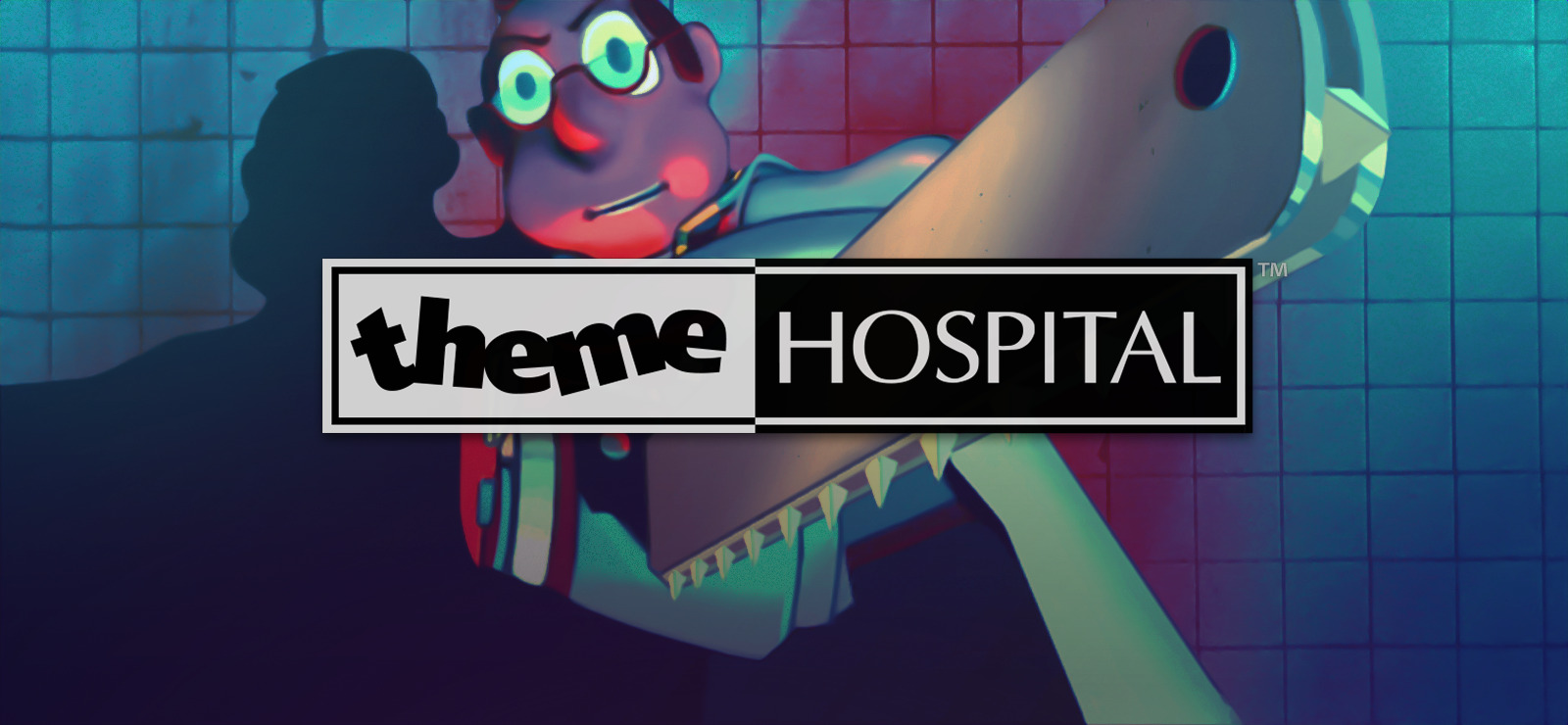
Build a hospital where every cure is ridiculous, every corridor is crowded, and every radiator matters.
Strategy / Simulation · 1997 · ~2.0 GB · Commercial · DRM-free purchase
That One Thing
It makes every management failure funny enough that a corridor full of vomiting patients becomes a story instead of a spreadsheet.
Theme Hospital understands that running a business is funnier when every customer is visibly falling apart. Bullfrog’s 1997 management classic puts you in charge of hospitals built to treat imaginary illnesses with wonderfully literal machines. Patients with Bloaty Head need reinflation. Hairyitis requires an alarming treatment room. Slack Tongue involves machinery no sensible health authority would approve. Then the queues begin.
Beneath the jokes is a sharp management game. Every hospital starts as an empty shell, and every wall becomes a decision. Rooms need space, equipment, and staff. Corridors need benches, radiators, drinks machines, and enough width to keep a crowd from becoming a human traffic jam. Doctors must be trained, handymen must keep machines from exploding, and receptionists somehow remain the calmest people in the building.
The campaign introduces complexity with admirable confidence. Early hospitals teach diagnosis and treatment. Later maps pile on epidemics, earthquakes, emergencies, research, reputation, and financial pressure until the comedy becomes camouflage for a genuinely demanding simulation. A profitable hospital can still collapse because one diagnostic loop sends patients across the entire building. A beautiful layout can fail because the toilets are too far away. Theme Hospital makes logistics personal by letting you watch every bad decision walk past.
Its interface and humor belong unmistakably to the 1990s, but the central design remains clean. Diseases create demand. Rooms create capacity. Staff, distance, temperature, and maintenance create friction. The player keeps adjusting that living machine while trying to hit each scenario’s targets before mortality, bankruptcy, or both become impossible to ignore.
The original game is also the required data source for CorsixTH, the open-source engine recreation that brings modern resolutions, operating-system support, interface scaling, custom campaigns, and a map editor. This catalog entry is therefore marked as a master copy. Buy the DRM-free GOG release once, and PlayBound can use that ownership chain honestly when presenting CorsixTH as the modern way to play.
GOG’s preserved release runs on current Windows and macOS systems, but CorsixTH is the version we recommend for serious modern play. The original still matters: it contains the copyrighted graphics, sounds, maps, and other data the replacement engine is not allowed to distribute.
Theme Hospital has been imitated, modernized, and spiritually continued, but its tone is still singular. It is warm without being gentle, complicated without becoming sterile, and gleefully willing to turn operational failure into slapstick. You will optimize a pharmacy queue with the concentration of an industrial engineer, then hear an announcement asking patients not to die in the corridors. That contrast never gets old.
Checking…
Minimum Requirements
Windows 10/11 or macOS · 1.8 GHz CPU · 2 GB RAM · DirectX 9.0c-capable GPU · 2 GB storage (runs via DOSBox)
Recommended Requirements
Windows 10/11 or macOS · 2+ GHz CPU · 4 GB RAM · any DirectX 9-capable GPU · 2 GB storage
Published by the game's own developers.
CorsixTH and similar engine recreations require the copyrighted graphics, sounds, maps, and other data from an owned copy of Theme Hospital.
PlayBound links to GOG’s preserved DRM-free release, which has a regular price of $5.99 and is often discounted.
Yes. CorsixTH supplies a modern engine but does not distribute the original game data, so you must provide files from the full game or supported demo.
Yes. GOG’s preserved version supports current Windows and macOS systems, although CorsixTH offers the better modern interface and resolution support.
Looking for the base game?
Theme Hospital has an overview, reviews, guides, and discussions covering every edition.